
Centre for Migration Research and Development
CMRD - Reports
This section presents research reports produced by the Centre for Migration Research and Development (CMRD). These reports document the findings of CMRD’s independent and commissioned studies on migration, displacement, labour mobility, and related social issues in Sri Lanka and the wider region. Each report reflects CMRD’s commitment to evidence-based research that informs policy and practice. Where available, links are provided for full-text access or project details associated with each report.
Support, Care, and Mutual Aid in Protracted Displacement Economies
By Ali Ali, Muhammed Ayub Jan, Claude Samaha, Eileen May, Angela Aung, Jasmin Paw, Anne-Meike Fechter, Mi Kun Chan Non, Michael Collyer, Adamnesh Bogale, Rajith Lakshman and Vidana Gamage Kalpani Yasoda.
In settings of protracted displacement, external sources of material support typically dry-up when international donors lose interest in any given conflict and ensuing displacement crisis. Populations in those settings must rely on different forms of support, financial, and non-financial, with some reciprocal or mutual in their nature. The aim of this paper is to show how displacement affected populations provide and receive different forms of support, and the importance of non-financial acts of care and support in protracted displacement economies. It also considers mutual aid by discussing the reciprocal features of this support. To do so, we present some qualitative and quantitative empirical findings from a major three-year-long research project that spanned across five countries, with four discussed here, and three sites in each of those countries. The extensive original dataset consists of over 15,000 household surveys, 682 qualitative interviews, 60 focus groups and stakeholder workshops, as well as five film-making workshops. The paper presents research findings from Ethiopia, Lebanon, Myanmar, and Pakistan.
Survey on Returnee Migrant Workers in Sri Lanka: A Gendered Analysis of Living and Working Conditions and Institutional Support Mechanisms
By: Anoji Ekanayake, Kopalapillai Amirthalingam, Nicola Piper and Sunethra Perera
The report presents the preliminary results of a survey of returnee migrant workers conducted in May 2022 in the Western and Eastern provinces of Sri Lanka. The primary objective of the survey was to examine the living and working conditions of Sri Lankan migrant workers in their host countries and the institutional support mechanisms in place to support them. The survey is part of a broader study that aims to ascertain whether migration along corridors regulated via bilateral labour agreements had positively affected the experiences of migrants, with a particular focus on differences by gender. In order to reflect this objective, the survey also sought to determine whether there are differences in the experiences of male and female migrant workers concerning the living and working conditions and the institutional support available.
Photovoice as a Method for Understanding Inclusive Infrastructure: Lessons from Sri Lanka
By: Shashini Gamage
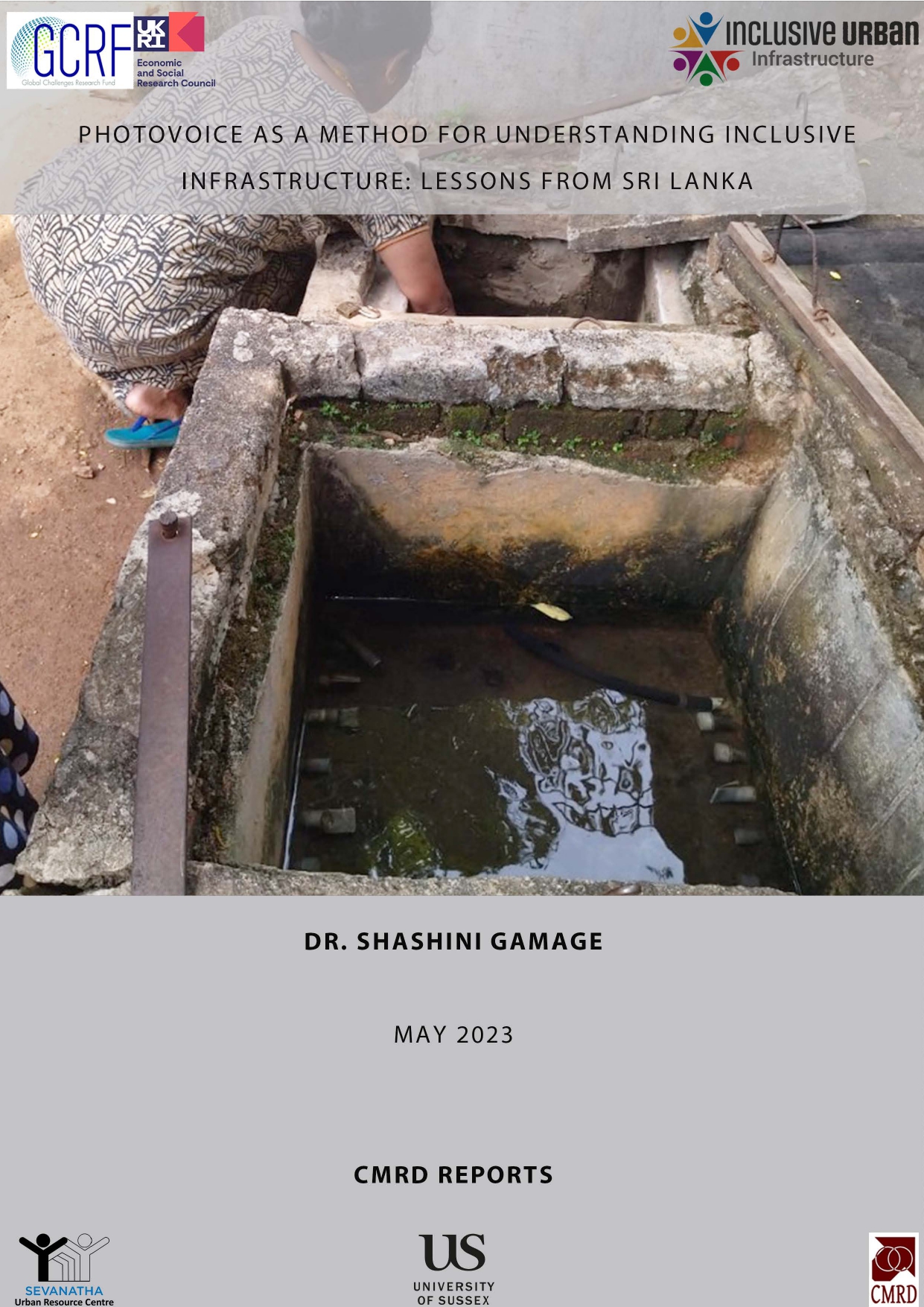
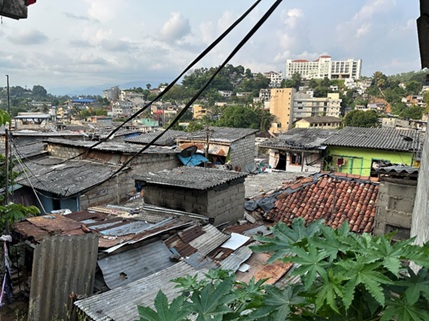
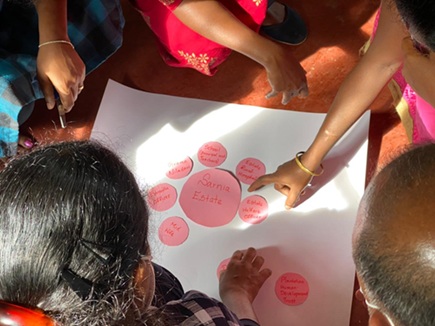
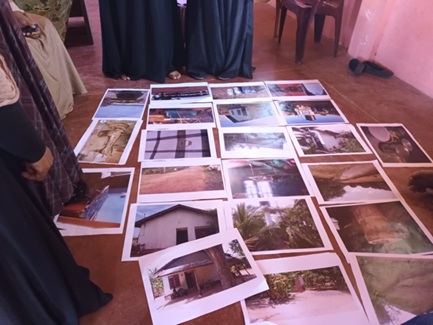
Photovoice was implemented as a visual data gathering and storytelling method in two field sites as a component of the qualitative methodology of the Inclusive Urban Infrastructure (IUI) project conducted in Sri Lanka. The method was implemented in Sarnia Estate, Badulla, and Nawagampura, Colombo. The implementation of the method, which included training, photographing, interviewing, and perspective-taking workshops, was carried out from October 2022 to February 2023. The objective was to devise the photovoice method as a participatory and community-engaging method of visual storytelling, enabling potential interventions in the locations.
Bilateral Labour Agreements Re-Examined from a Gender Perspective: An Interdisciplinary and Intersectional Framework
By: Nicola Piper
Bilateral labour agreements (BLAs) have become states’ preferred options as tools of migration governance to maintain orderly and regular flows of temporary labour migration. Yet, such instruments remain largely gender-blind and neglect human rights concerns. It is vital that the study and analysis of BLAs employs a gender lens that draws from interdisciplinary insights on gendered governance generated by feminist scholarship ranging from legal and policy studies, global political economy, and international relations to political sociology derived from various and mixed methodologies. Insights on the gender effects of BLAs should be the outcome of research on migration governance not only ‘from above’ but also ‘from below’.
Bilateral Labour Agreements Between Sri Lanka and Other Jurisdictions: A Critical Legal Analysis
By: Wasantha Seneviratne, Darshana Sumanadasa, Akalanka Thilakarathna and Ranuli Senaratne
Migration in search of employment has become a common occurrence in the contemporary world, and many countries search for cheap labour from workers migrating particularly from developing and underdeveloped countries. This paper analyses the provisions of selected Bilateral Labor Agreements in light of international human rights and other relevant treaties adopted by the International Labour Organization, and briefly discusses the applicability of the relevant Sustainable Development Goals and targets under the UN 2030 Agenda. This is a qualitative research that followed the method of content analysis of those BLAs, mainly using secondary data along with comparative examples. Findings reveal that selected BLAs are not providing the expected protection to migrant workers and are not fully in compliance with the international obligations of Sri Lanka under international human rights and labour rights instruments.
The Impact of Displacement on Dowries in Sri Lanka
By Danesh Jayatilaka and Kopalapillai Amirthalingam
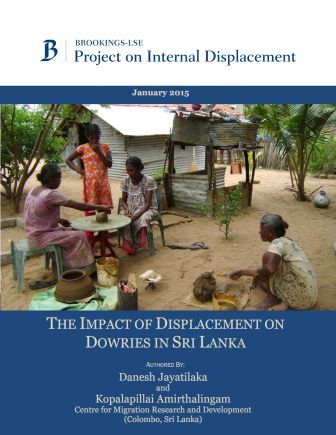
Displacement, whether due to conflict, natural disasters or development, not only directly and negatively affects those who are displaced, but also can have far-reaching effects on the culture and society as a whole. The objective of this study is to examine the impact of displacement, caused by both the civil war and the 2004 tsunami – on Sri Lanka’s dowry systems – and the subsequent consequences for women’s livelihoods, family life and social traditions. While there are existing studies on displacement, gender and dowry systems in Sri Lanka, to the best of our knowledge, there are no studies examining the impact of displacement on dowries in Sri Lanka. This study is an attempt to shed light on this subject.
[link]
Planned relocations in the context of natural disasters: The case of Sri Lanka
By Ranmini Vithanagama, Alikhan Mohideen, Danesh Jayatilaka and Rajith Lakshman
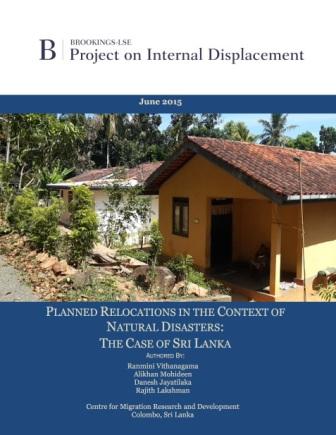
This is a case study about the relocation experience of 18 families that were resettled in Kananke Watta, in Matara District, Sri Lanka, following the Indian Ocean tsunami of 2004. Sixteen of these families originally lived very close to the sea. They were relocated to Kananke Watta, a bare land located in the interior, which was converted into a resettlement site after the tsunami. The remaining two families moved in later, one having bought property there and the other renting it from the original owners.
[link]